
From Illusion to Execution: What Makes a Plan Real
Most people have a notebook full of plans that never left the page.
They weren’t lazy. They were stuck in the illusion of planning.
The truth is — writing is easy. Execution is expensive.
Every real plan demands proof in your daily actions, not just your ideas.
This guide is for anyone tired of rewriting the same goals every January and ready to make something move.
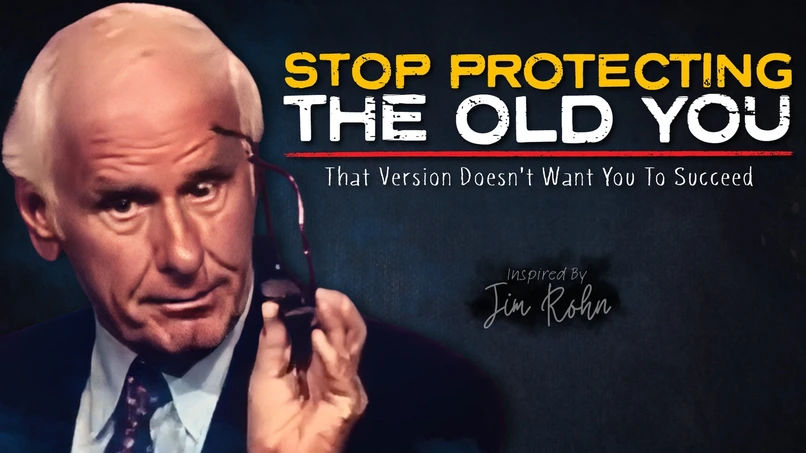
Watch the Video Lesson
This is the full video lesson — free to watch and made to work hand-in-hand with the Action Guide below.
It will help you see how great plans survive contact with reality — and how to build one that does.
Apply It With The Action Guide:
Action Guide 📝
The Illusion of Planning
Writing something down feels productive because it gives structure to desire. But a written plan without movement is just a decorated wish. The notebook gives you the illusion of order. You feel focused, serious, even confident. But unless the ink turns into action, you haven’t started anything.
Writing is only the invitation — your actions are the RSVP. Every page you fill means nothing if your mornings look the same, if your habits don’t shift, if your phone still wins every battle for attention. This is why understanding the most common habits that steal your success matters before calling anything a plan.
The illusion of planning traps a lot of good people. They confuse vision with movement, excitement with commitment. They feel progress because they’ve mapped out a future — but they haven’t paid a single cost to earn it. Real planning begins when something in your daily life changes.
Before you call it a plan, ask yourself:
- What has actually begun?
- What has changed in your daily behavior?
- What proof exists that this plan lives beyond paper?
A plan that never leaves your journal isn’t a plan at all. It’s imagination dressed up as progress. The gap between knowing and doing is where most people lose years. Don’t let that be you.
Plans Must Demand Something
If your plan doesn’t ask something of you, it will never give anything back. A plan is supposed to be uncomfortable. It should stretch your capacity, test your consistency, and make you face your limits.
Real plans are designed to pull you out of convenience. They’ll require strength you haven’t built yet, skills you don’t fully have, and habits that must replace weaker ones. That friction — the part that makes you hesitate — is the exact space where growth begins.
When you’re growing, you should feel slightly underqualified for your own goal. That’s not insecurity — it’s evidence that you’re chasing something worth doing. If your plan fits too neatly into who you already are, it won’t change you. You’ll simply end up repeating old patterns under new language. This is why learning how to set goals that stretch you is essential.
Ask yourself:
- What does this plan require from me that I’ve been avoiding?
- What level of discomfort have I decided I’m willing to tolerate to grow?
Every worthy goal carries a cost. You either pay it through effort and focus, or you pay it later through regret.
Preparation Begins With Truth
No amount of hope can replace honesty. Hope has its place — it inspires. But if your plan depends on pretending, it’s already fragile.
A strong plan begins when you stop lying to yourself about time, habits, and effort. If you say you’ll “find time,” you won’t. Time isn’t found; it’s reassigned — which is why you must protect your calendar like it’s gold. If you believe that motivation will appear when needed, it won’t. Momentum comes from motion, not mood.
A plan built on imagination collapses under pressure. But a plan built on truth — even uncomfortable truth — can survive reality.
So before you chase your next big goal, pause long enough to do an honest audit:
- Where does your time actually go each day?
- Which habits quietly sabotage you, even the small ones that seem harmless?
- What skills do you truly have — not the ones you wish you had?
- What resources are real, and which ones are still hypothetical?
Facing the truth may make your plan smaller for now, but it will make it stronger later. A reduced plan built on truth is infinitely more powerful than a grand illusion built on hope.
Evidence Over Excitement
Excitement gets you moving. Evidence keeps you moving.
Most people start strong because they feel inspired. The emotion creates energy, and they mistake that feeling for readiness. But when the spark fades — and it always fades — they’re left with nothing to stand on.
If your readiness is emotional, you’ll quit when enthusiasm disappears. But if it’s built on evidence — small wins, consistent effort, measurable progress — you’ll endure when the mood dries up. This is why strong plans increase follow-through only when they are tied to specific, repeatable behaviors.
Evidence doesn’t lie. It tells you what’s working, what’s not, and what’s real. It builds confidence from proof, not hype. That’s why tracking your actions matters more than announcing your intentions.
Before you commit to another big idea, ask:
- What proof do I already have that I can sustain this pace?
- What small victories can I point to that show real progress?
- Am I chasing the feeling of motivation or the reality of mastery?
If your plan depends on staying excited, it’s too fragile. Build on facts, not feelings. Let your consistency become your source of confidence.
The Power of a Strong “Why”
A real plan needs an engine — and that engine is why. Without it, your plan is a parked car: impressive on the outside, but going nowhere.
Convenience starts plans; conviction sustains them. You can fake motivation for a few days, but when boredom hits, when progress slows, when the praise stops — only purpose keeps you going.
Your “why” must connect to something deeper than status or approval. It should tie directly to the kind of person you want to become and the kind of life you actually want to live. If it’s not personal, it won’t last. This is why purpose gives power to goals when motivation fades.
A strong “why” doesn’t vanish when you’re tired. It doesn’t flinch when things get inconvenient. It outlasts discomfort and delay.
Ask yourself:
- Does my reason for this goal outlast boredom, delay, and difficulty?
- Would I still pursue it if nobody saw or celebrated it?
- Does it connect directly to the life I truly want, not the life that sounds impressive?
The strength of your “why” determines the endurance of your plan. Weak reasons collapse quickly. Strong reasons pull you through storms.
When you strip away the noise, real planning isn’t about structure — it’s about proof. The words on paper aren’t the plan. They’re the invitation to a new version of yourself. The plan becomes real only when it starts changing your choices, rewriting your habits, and demanding evidence that you’re serious.
The illusion of progress fades fast. But once you move from illusion to execution — from excitement to evidence, from talk to truth — you begin to build a life that can hold the weight of your ambitions.
Clarity Beats Hope
Hope feels good. It gives you a glimpse of what could be — but it doesn’t tell you how to get there. Clarity does. Clarity slices through confusion and gives your energy direction.
Most people don’t fail because they lack motivation; they fail because they’re unsure what “winning” actually means. They say they want to “get better,” “make more money,” or “be consistent,” but none of those statements can be measured. You can’t track “better.” You can’t schedule “consistent.” You can’t achieve “someday.”
Hope is a feeling. Clarity is a map. You can follow a map. You can’t follow a feeling.
Strong goals are specific. They define not only what you want but how you’ll know when it’s done.
- Specific outcomes: measurable, visible results.
- Clear measurements: numbers, timeframes, benchmarks that tell you where you stand.
- Defined timelines: a window to operate within, not an endless runway.
- A visible finish line: a moment when you can say, “Yes, this part is complete.”
When your goals are clear, your behavior organizes itself. Your mind knows what to chase, what to ignore, and what to say no to. Vague goals, on the other hand, whisper. They’re too polite to demand action. Clear goals command your focus.
If you wake up every day not sure what winning looks like, you’ll burn energy without traction. But when clarity replaces hope, your plan stops being an idea and starts becoming a path.

Habits Tell the Truth
Every plan sounds great until it has to fit into your day. That’s when truth shows up.
Your plan is only as real as your daily routine. You can dream about transformation, but your habits will expose the truth. Big dreams collapse under weak habits every time. You can’t build a disciplined life on random effort.
If your days don’t reflect your goals, then your plan doesn’t exist — at least not in reality. Your routines are the real scoreboard of your commitment.
Look closely at your week:
- What do your mornings support — momentum or distraction?
- What do your evenings reinforce — recovery or regression?
- Which habits quietly drain your focus or erode your confidence?
You don’t need a perfect day, but you do need a pattern that supports your plan more often than it sabotages it. If your habits are scattered, your results will be too.
Your day always confesses what your plan pretends to be.
If your time, attention, and behavior don’t match the life you say you want, it’s time to realign. Not with guilt, but with clarity. You don’t need a full overhaul — you just need one habit at a time to move in the direction of who you’re becoming.
Discipline Over Emotion
Motivation is a visitor. Discipline is a resident.
Motivation shows up when it’s convenient — when you’re inspired, rested, or optimistic. But discipline shows up regardless of mood. It doesn’t ask how you feel; it asks who you intend to become.
Discipline isn’t harsh. It’s steady. It’s the quiet strength that keeps you moving when your emotions try to pull you off course. When you act despite feeling tired, bored, or discouraged, you’re training your identity. You’re teaching yourself that your word is stronger than your feelings.
Every disciplined act is a small vote for the kind of person you’re building. And identity — not inspiration — is what carries real plans across the finish line.
A disciplined person outlasts a motivated one every time. Motivation fades. Discipline endures. And endurance, more than talent or timing, is what separates people who talk about their goals from those who live them.
Simplicity Creates Momentum
Complexity is seductive. It makes you feel smart. You can spend hours designing intricate systems, detailed charts, and layered strategies — and yet, still be standing at the starting line.
Complexity feels productive but kills movement. The more moving parts you create, the harder it becomes to begin. A good plan doesn’t need to be clever. It needs to be executable.
Momentum loves simplicity. Start small, start clear, start now.
Ask yourself:
- Can this plan be started with one step, right now?
- Have I replaced movement with endless revision?
If your plan requires perfect conditions before you act, it’s not a plan — it’s a stall tactic dressed up as preparation.
Real progress often begins with one small, repeatable motion. The simpler the plan, the easier it is to build consistency. And once consistency is in motion, momentum takes over.
If it can’t start easily, it won’t finish strongly.
Accountability Prevents Drift
Even good plans drift when left unreviewed. Drift doesn’t happen in a day — it happens quietly, through small compromises and unmeasured progress. You start skipping reviews, softening deadlines, and calling “effort” a substitute for results.
Effort is good — but effort alone isn’t achievement. Only measured effort creates progress you can build on.
That’s why accountability matters. It’s not about judgment; it’s about alignment. Regular review keeps you honest about what’s working and what’s not.
Build checkpoints:
- A short weekly review of what you completed and what slipped.
- Clear metrics — a way to measure results, not just activity.
- Honest adjustments before problems become failures.
Accountability turns imagination into movement. It keeps your plans from drifting into “someday.”
Without accountability, you’ll slowly lower your standards to match your current comfort. With it, you’ll raise your performance to match your true potential.
Adjustment Is Strength, Not Failure
The goal is sacred. The plan is not.
Too many people treat their original plan like a sacred text. They defend it, justify it, and refuse to change it — even when it’s clearly not working. But reality doesn’t care about your pride. Flexibility is intelligence.
Strong planners adjust quickly. Weak planners double down and call it “persistence.”
Every plan is a hypothesis. It’s your best guess at what might work. And as you move forward, reality will reveal what actually does. When you see that truth, adjust. Adapt. Evolve.
Change doesn’t mean you failed. It means you learned. The only real failure is refusing to adapt.
Stay committed to the destination, not the draft. Your plan is a vehicle, not a monument.
The Real Outcome of Planning
A plan isn’t supposed to make you feel ready — it’s supposed to make you real. The process of pursuing it is what develops your strength, discipline, and clarity.
The paper doesn’t change you. The practice does. The value of a plan isn’t in how polished it looks, but in how powerfully it transforms you through execution.
In the end, success isn’t about finishing the plan. It’s about becoming the kind of person who can. The kind of person who acts when others hesitate, who adjusts when others complain, and who builds when others keep dreaming.
That’s the real outcome of planning: not perfection, but transformation.
Ask Yourself:
- What part of your plan is still just a wish?
- What daily behavior proves your commitment?
- What proof exists that you’re ready, not just excited?
- What discomfort are you still avoiding?
- Who must you become to carry this plan all the way through?
What You Can Do Next
Today:
- Pick one plan you’ve written and identify the first visible step.
- Remove one unnecessary complexity that’s keeping you from starting.
- Write down your “why” and place it where you’ll see it daily.
- Review your habits and remove one that contradicts your plan.
This Week:
- Schedule a 30-minute personal review to check progress.
- Create one simple metric for success — a number, date, or result.
- Ask a trusted friend or peer to hold you accountable.
- Adjust one weak spot in your plan with honesty, not pride.
Stay in Motion
Don’t worship the plan — use it. The real work isn’t in your notes, your spreadsheets, or your vision board. It’s in the next action that proves your words are real.
Stay in motion. Stay honest.
Let execution become your teacher.
That’s how a plan stops being a dream
—
and starts becoming your life.






Share Your Thoughts & Ideas